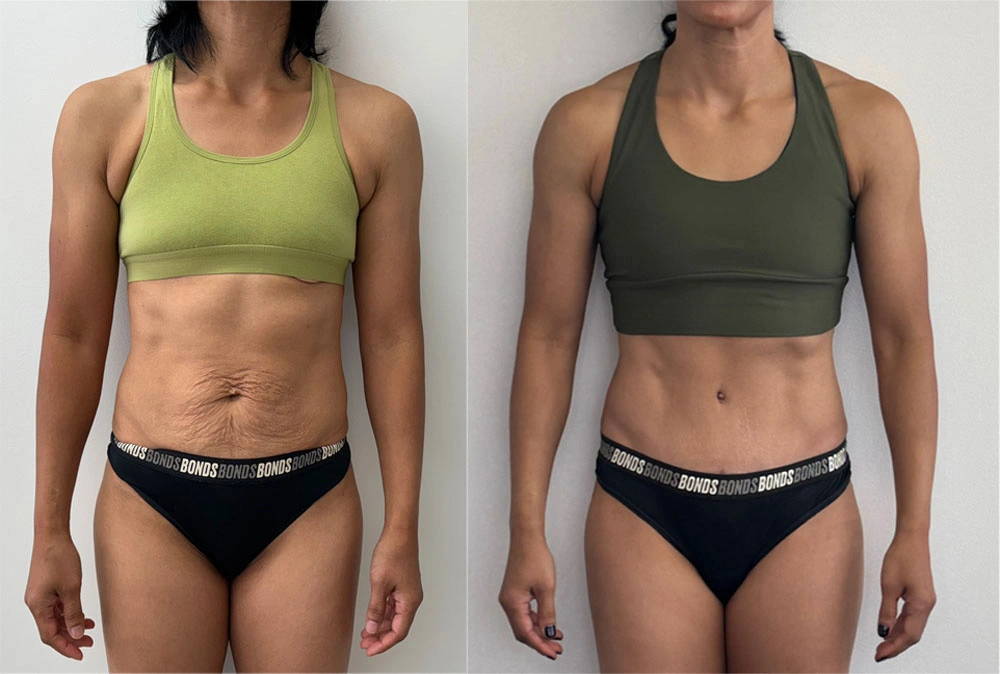
A mini abdominoplasty may be suitable when loose skin and underlying tissue are mainly confined below the umbilicus, or belly button.
The operation generally uses a shorter lower-abdominal incision and does not usually require repositioning of the umbilicus.
The degree of correction is limited. A mini abdominoplasty is not a smaller substitute for a standard abdominoplasty when laxity affects the upper abdomen or when more extensive abdominal-wall repair is required.
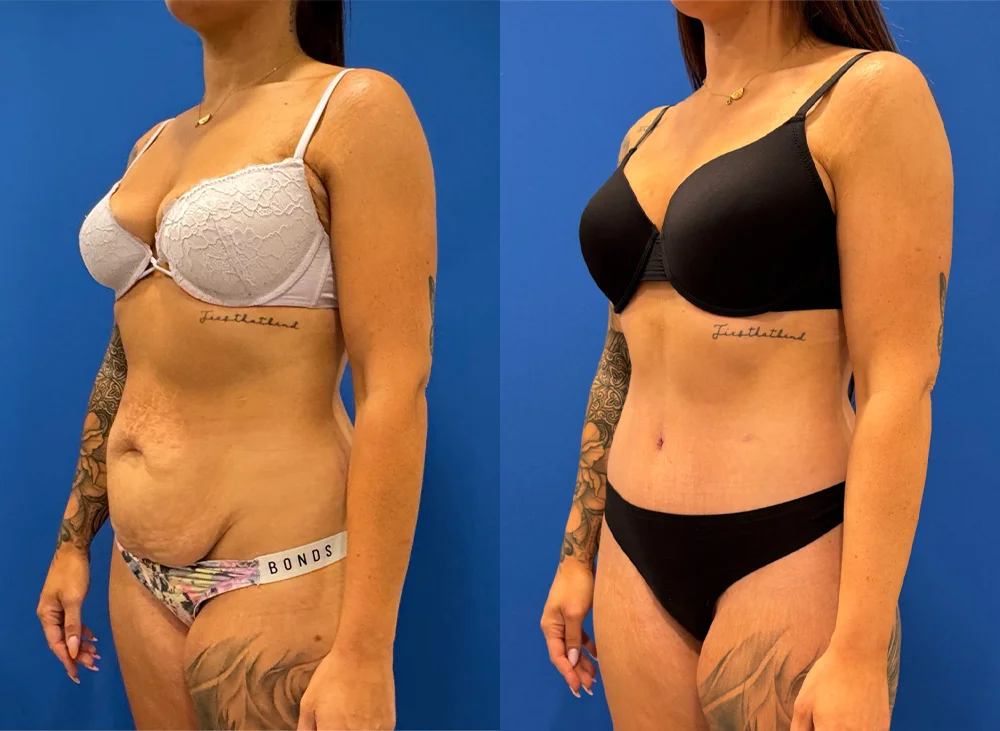
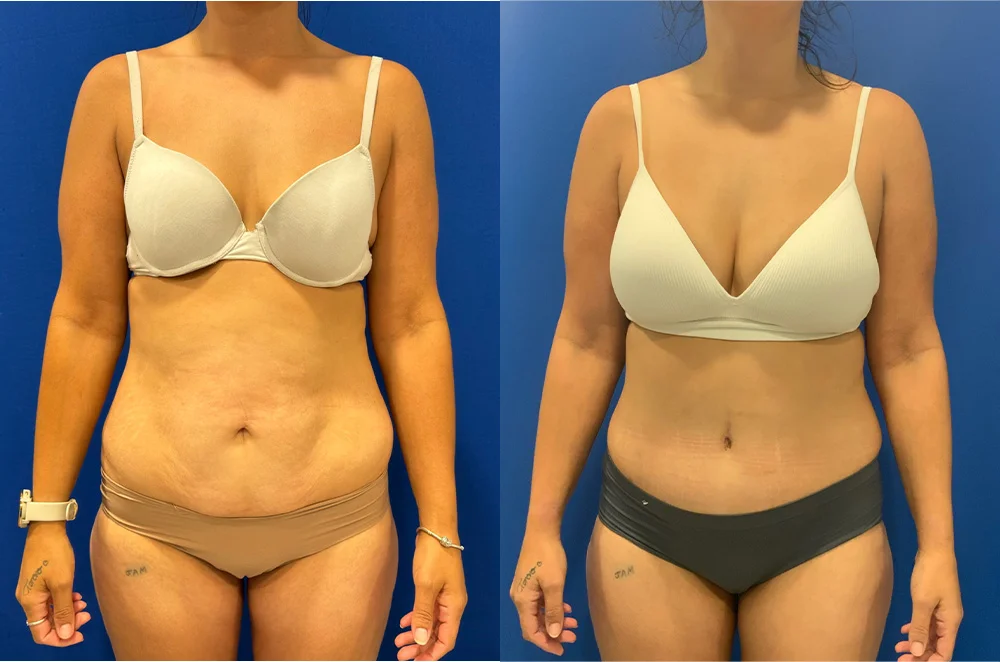
A standard abdominoplasty removes excess abdominal skin and underlying tissue through a lower-abdominal incision.
A surgeon generally makes an incision around the umbilicus so it can be brought through the repositioned abdominal skin. The surgeon may also repair rectus diastasis when clinically indicated.
This procedure primarily treats the front of the abdomen. It may not adequately address substantial loose skin extending into the flanks or around the back.
When loose skin and contour concerns extend into the flanks, Dr Barker may consider extending the operation around the sides of the body. He describes this approach as a 270-degree abdominoplasty.
Rather than ending near the hips, the incision extends further around the torso. This allows excess tissue to be removed from the flanks and treats a wider area than a standard abdominoplasty. However, it stops short of a complete circumferential operation.
Liposuction may be used to address selected areas of localised fat. However, liposuction does not remove significantly loose or redundant skin. Surgical excision may be required when excess skin is the main concern.
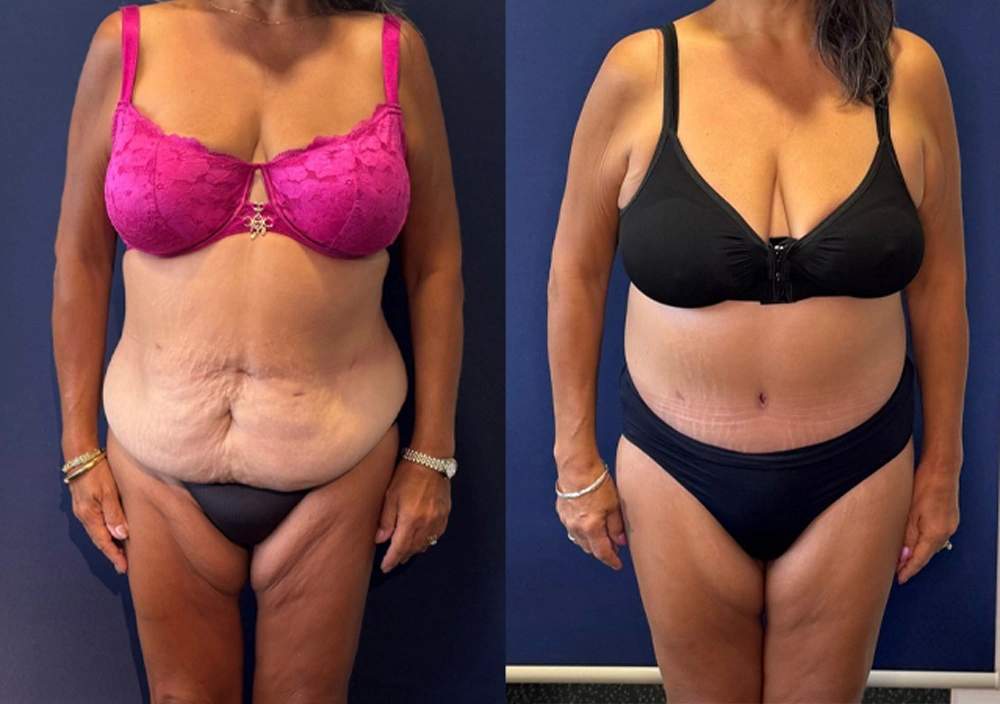
A fleur-de-lis abdominoplasty may be considered when excess abdominal skin is present in both horizontal and vertical directions. This pattern is commonly seen following significant weight loss or bariatric surgery.
The operation combines a lower-abdominal incision with a vertical midline incision. The vertical component allows tissue to be removed and tightened in a direction that a horizontal incision alone cannot adequately address.
The trade-off is an additional permanent vertical scar through the centre of the abdomen.
A 360-degree abdominoplasty, also known as a belt lipectomy or lower body lift, removes a continuous band of excess skin and underlying tissue from around the lower torso.
It may be considered following significant weight loss when loose skin affects the abdomen, flanks and lower back rather than the abdomen alone.
This is a longer and more complex operation than an isolated abdominoplasty. The scar extends around the torso, and the associated risks, positioning requirements and recovery demands are greater.
Some patients have excess tissue extending across the upper back beneath the bra line, as well as vertical skin laxity through the front of the abdomen. These areas may not be adequately addressed by standard or circumferential abdominoplasty alone.
For selected patients with this pattern of tissue laxity, Dr Barker may consider a corset abdominoplasty.
The procedure may include an incision along the bra line, a vertical midline abdominal component, and circumferential contouring of the torso. The name refers to tightening the torso in more than one direction.
A corset abdominoplasty creates extensive permanent scars and involves a substantial recovery. It is reserved for carefully selected patients whose tissue distribution cannot be adequately treated with a less extensive procedure.