Thigh Lift Plastic Surgeon Wollongong & Sydney

Thigh lift surgery, also called thighplasty, removes selected excess skin and underlying tissue from the inner or upper thighs.

Introduction to Thigh Lift

Understanding Thigh Lift Surgery: Suitability, Scars and Recovery.

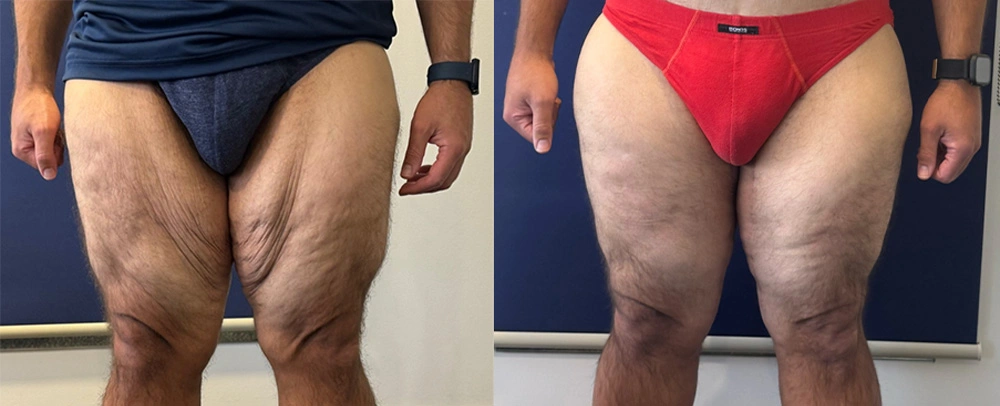
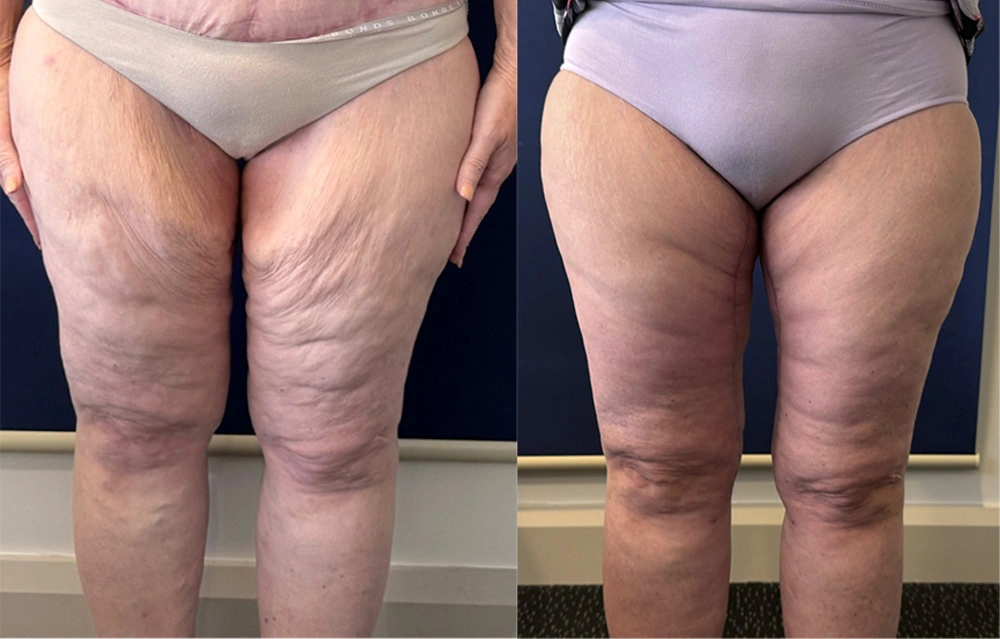
Loose thigh skin may develop following significant weight loss, bariatric surgery, ageing or changes in skin elasticity. Skin folds can contribute to rubbing, irritation, hygiene difficulties, discomfort during movement and problems with the fit of clothing.

The appropriate procedure depends on where the loose skin is located and how far it extends. Some patients have excess tissue mainly in the upper inner thigh, while others have laxity extending further down the leg or beyond the groin.

Specialist Plastic Surgeon Dr Anthony Barker is based in Sydney and performs thigh lift and post-weight-loss body-contouring surgery for suitable patients from across Australia. Each procedure is planned following an individual assessment of the patient’s anatomy, general health and treatment priorities.

Patients travelling from interstate may require additional planning for consultations, surgery and postoperative care.

Female lower body outline showing thighs and legs from front view for thigh lift procedure illustration - Thigh in New South Wales, Australia

What Does a Thigh Lift Involve?

A thigh lift removes selected areas of excess skin and underlying tissue to alter the contour of the inner or upper thighs.

It is not a weight-loss procedure and cannot create a particular leg shape or guarantee symmetry. The degree of change depends on the amount and location of tissue being removed, skin quality, existing scars and individual healing.

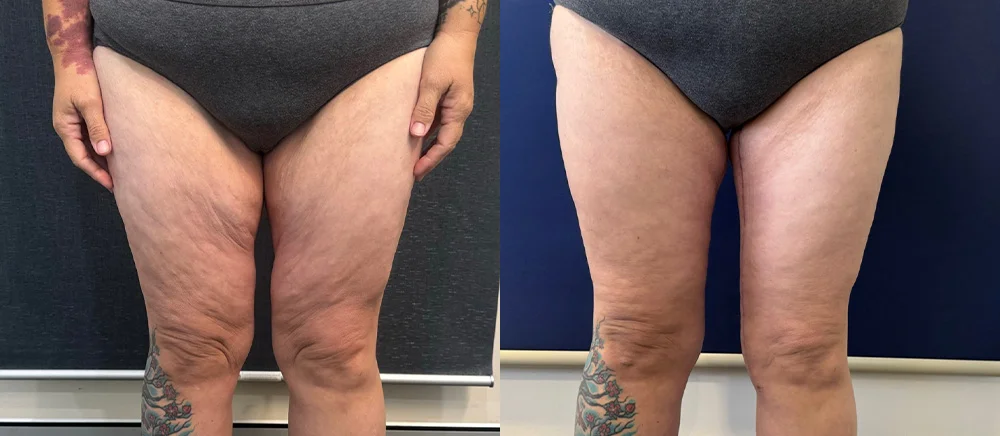
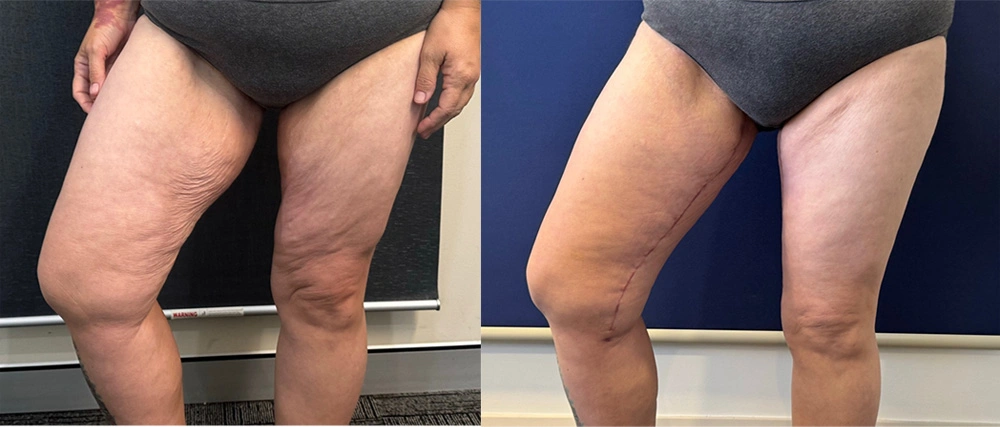
Every thigh lift creates permanent scars. A smaller area of loose skin may be treated with a shorter incision, while laxity extending further down the thigh generally requires a longer scar.

Liposuction may also be used in selected patients when localised fat contributes to the thigh contour. However, liposuction does not remove substantially loose skin and may make laxity more noticeable when skin elasticity is poor.

Types of Thigh Lift Surgery

The thigh lift technique and scar pattern depend on the location and direction of the loose tissue.

A medial thigh lift with a horizontal scar primarily treats excess skin and tissue in the upper inner thigh.

The incision is generally positioned in or near the groin crease. This approach may suit cases where laxity is concentrated in the upper thigh but offers limited correction when loose skin extends further toward the knee.

The scar is permanent and may become visible if it stretches or moves from its planned position during healing.

Thigh Lift Surgery After Significant Weight Loss

Following significant weight loss, loose tissue may affect the thighs as well as the abdomen, buttocks, arms and other areas.

Thigh lift surgery should therefore be planned in the context of the patient’s wider body-contouring priorities rather than considering the thighs in isolation.

Patients should generally be at or close to their goal weight and have maintained a stable weight for at least six months before surgery.

Following bariatric surgery, body-contouring procedures are commonly considered around 12 to 18 months after surgery, once rapid weight loss has finished, and weight has remained stable.

Patients who have undergone bariatric surgery may also have anaemia, protein deficiency or low levels of iron, vitamin B12, folate, vitamin D or other nutrients that can affect healing.

Blood tests and input from the patient’s general practitioner, bariatric surgeon or dietitian may be requested. Identified nutritional deficiencies may need to be treated before surgery proceeds.

If several body areas require treatment, Dr Barker may recommend staged operations to limit operating time and make recovery more manageable.

Is Thigh Lift Surgery Suitable for Me?

For patients considering thigh lift surgery in New South Wales, suitability is based on health, anatomy, weight history, symptoms and expectations rather than appearance alone. Factors considered include:

  • The amount and location of excess skin and soft tissue
  • Weight stability and any plans for further weight loss
  • General health, mobility and previous operations
  • Smoking, vaping or other nicotine use
  • Diabetes, vascular disease, lymphatic problems and other conditions that may affect healing
  • Nutritional status, particularly following bariatric surgery
  • Understanding of permanent scars, recovery and possible complications
  • Ability to follow wound-care, garment and activity instructions

Further weight loss, nicotine cessation, nutritional treatment or medical optimisation may be recommended before surgery. The option of not having surgery will also be discussed.

Dr Anthony Barker in blue scrubs consulting with patient in medical office - in New South Wales, Australia

Thigh Lift and Liposuction

A thigh lift and thigh liposuction treat different concerns.

Liposuction removes selected areas of localised fat but does not remove substantially loose skin. When the skin has poor elasticity, liposuction alone may make the laxity more noticeable.

A thigh lift removes excess skin and underlying tissue. You may combine liposuction with the procedure when both skin laxity and localised fat contribute to the thigh contour.

Dr Barker assesses skin quality, tissue distribution, and the amount of localised fat before recommending a thigh lift, liposuction, or a combination of the two.

Planning Thigh Lift Surgery With Dr Barker

During a thigh lift consultation, Dr Barker assesses the inner and upper thighs, skin quality, fat distribution and the direction and extent of the tissue laxity.

The assessment may include discussion of:

  • Medical history and current health
  • Previous operations and scars
  • Weight-loss and bariatric surgery history
  • Weight stability
  • Mobility and circulation
  • Nutritional health
  • Current medicines and allergies
  • Smoking, vaping and other nicotine exposure
  • The patient’s concerns and treatment priorities

Dr Barker will discuss the thigh lift technique that may be suitable, the anticipated scar pattern, whether liposuction may be appropriate, the limitations of surgery, possible alternatives, recovery requirements and potential risks.

Further weight loss, nicotine cessation, nutritional treatment or management of other health conditions may be required before surgery can proceed.

We also discuss the option of not proceeding with surgery.

For cosmetic surgery, the practice will explain the applicable referral, consultation, psychological screening, informed consent and cooling-off requirements under current Medical Board of Australia guidelines.

Dr Anthony Barker in scrubs and glasses speaking with healthcare colleague in medical setting - in New South Wales, Australia
White ethereal smoke wisps dispersing against light background creating abstract atmospheric pattern

Recovery After Thigh Lift Surgery

Your Guide to Post-Thigh Lift Care

Recovery varies depending on the thigh lift technique, the extent of surgery, and the patient’s individual health and healing.

Swelling, bruising, tightness, discomfort and changes in sensation are expected during the early recovery period. Walking may initially feel restricted, and patients may require assistance with dressing, showering, household tasks and other everyday activities.

A compression garment may be recommended to help manage swelling and support the operated areas.

Thigh lift incisions are exposed to movement, moisture and friction. Incisions near the groin crease may be under tension during sitting, standing and walking. Wound separation or delayed healing can occur and may require dressings and follow-up care for an extended period.

Gentle walking is generally encouraged to support circulation. Avoid strenuous exercise, heavy lifting, and activities that place tension on the incisions until medically cleared.

Many patients require approximately two to four weeks away from work, depending on the extent of surgery and the physical demands of their job. Activity generally increases over approximately six weeks, while return to strenuous exercise may take longer.

Swelling may continue for several months. Thigh lift scars are permanent and commonly take 12 to 18 months or longer to mature.

These timeframes are general estimates. Recovery may take longer if wound-healing or other complications occur.

Thigh Lift Scars

All thigh lift procedures create permanent scars.

Depending on the technique, scars may be positioned:

  • In or near the groin crease
  • Vertically along the inner thigh
  • Across the upper thigh
  • Beyond the groin or upper thigh in more extensive surgery

Scars may remain visible in underwear, swimwear or certain clothing. They can also widen, thicken, become raised, change colour, feel uncomfortable or move from their planned position during healing.

A shorter incision cannot always adequately treat loose skin extending down the thigh. Choosing a shorter scar may mean accepting some excess tissue.

Dr Barker will explain the anticipated scar pattern and the likely limitations of each approach during consultation.

Risks and Possible Complications of Thighplasty

Your Guide to Post-Thigh Lift Care

Thigh lift surgery is major surgery. Possible complications include bleeding, infection, fluid collection, delayed wound healing, wound separation, persistent pain, skin or tissue loss, noticeable scarring, changes in sensation, asymmetry, long-lasting leg swelling, blood clots, anaesthetic complications, and the need for further treatment or revision surgery.

Blood clots can form in the deep veins of the legs (deep vein thrombosis) and may travel to the lungs (pulmonary embolism), which can be life-threatening. We plan measures to reduce this risk based on each patient’s individual risk, and we generally encourage early walking.

Reduced blood supply at the wound edges can cause areas of skin or underlying tissue to break down. This may require longer dressings, additional surgery, or a longer recovery, and can leave a wider or more noticeable scar.

Surgery in the groin and inner thigh can disrupt the lymphatic vessels that drain fluid from the legs. Swelling of the lower legs usually improves over several months but can be long-lasting and, in some patients, may require ongoing compression or lymphoedema treatment.

Numbness, tenderness or nerve-related pain around the scars may continue for several months and, in some patients, may be permanent.

General anaesthesia and sedation carry their own risks, including reactions to medicines and breathing or heart problems. The anaesthetist will assess these risks before surgery.

Seek urgent medical attention if you develop chest pain, shortness of breath, pain or swelling in one calf, a fever, rapidly increasing swelling or heavy bleeding after surgery.

The location of thigh lift incisions can make wound care and scar healing challenging. More extensive procedures generally require longer recovery.

Smoking or nicotine use, nutritional deficiencies, circulation or lymphatic problems and certain medical conditions can also affect healing.

Dr Barker will discuss the risks most relevant to the proposed procedure and the patient’s individual health. Results, symmetry, scar quality and recovery timeframes vary and cannot be guaranteed.
Thigh Lift Costs, Medicare and Private Health Insurance

The cost of thigh lift surgery depends on the technique, the extent of tissue removal and whether treatment is combined with liposuction or another procedure.

We provide an individualised quotation after consultation, including an outline of the expected surgeon, anaesthetist, and hospital fees.

A Medicare rebate may be available when surgery satisfies all requirements of a relevant Medicare Benefits Schedule item. For redundant non-abdominal skin following significant weight loss, MBS item 30169 may apply in selected circumstances.

Eligibility includes specific requirements relating to functional problems, the amount of weight lost and weight stability before surgery. Medicare does not cover thigh lift surgery performed solely for cosmetic reasons.

When an eligible MBS item applies, private health insurance may contribute towards hospital costs depending on the patient’s policy and level of cover. The practice cannot guarantee Medicare and private health insurance benefits, and out-of-pocket costs may remain.

Can Medicare Contribute to Thigh Lift Costs After Weight Loss?

A Medicare rebate may be available when thigh lift surgery satisfies all requirements of a relevant MBS item.

For redundant non-abdominal skin after significant weight loss, MBS item 30166 may apply when there are functional problems, the weight loss is at least 5 BMI points, and the patient’s weight has been stable for at least 6 months before surgery.

Medicare does not cover thigh lift surgery performed solely for cosmetic reasons. Private health insurance may contribute towards hospital costs when an eligible item applies, depending on the patient’s policy.

Medicare and private health insurance benefits cannot be guaranteed, and out-of-pocket expenses may remain.

Dr Anthony Barker in navy suit smiling with arms crossed against blue background

About Dr Anthony Barker

Dr Anthony Barker is a Specialist Plastic Surgeon and Fellow of the Royal Australasian College of Surgeons (FRACS). His qualifications include a Bachelor of Arts in Biomedical Engineering from Harvard University, and Bachelor of Medicine and Bachelor of Surgery and Master of Surgery (Plastics) degrees from the University of Sydney.

Dr Barker consults patients from Sydney and throughout New South Wales, considering thigh lift and post-weight-loss body-contouring surgery at Macquarie University Hospital, Sydney CBD and Surry Hills. An individual assessment is required before recommending any procedure.

Thigh Lift Consultations in Sydney

Dr Barker is based in Sydney and consults at Macquarie University Hospital, Sydney CBD and Surry Hills. He performs thigh lift and post-weight-loss body-contouring surgery for suitable patients from across New South Wales and throughout Australia.

Patients travelling from interstate may be able to complete some appointments by telehealth. An in-person clinical assessment is required before surgery, and patients must remain in Sydney for an appropriate period following their procedure.

Postoperative arrangements are planned individually based on the operation, recovery requirements, and where the patient lives.

Dr Barker requires an individual consultation and clinical assessment before recommending a thigh lift technique, scar pattern, or providing a surgical quotation.

Dr Anthony Barker standing in operating room with surgical lights and medical equipment in background - in New South Wales, Australia

Thigh Lift FAQs

Schedule a

genuine, beautiful, natural looking results.

Consultation